
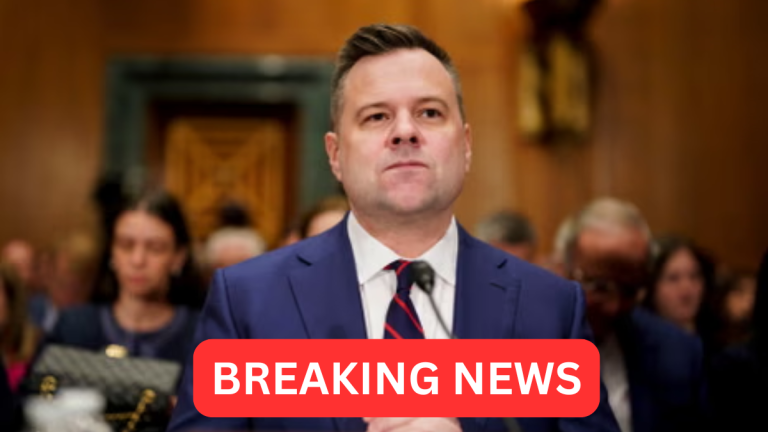
Senators Bill Cassidy of Louisiana, Susan Collins of Maine, and Lisa Murkowski of Alaska aren’t names you’d expect on the same side of an amendment sponsored by Democrat Mark Warner. These three have been reliable conservative votes on everything from immigration to fiscal policy. So what on earth spooked them enough to side with a Virginia Democrat on a national security question? I’ll be honest — when I saw those names, I did a double take. The answer is Bill Pulte, and the question of whether a housing regulator has any business running America’s intelligence community.
The three Republicans voted for an amendment to the budget reconciliation package that would have barred any Senate-confirmed agency head from simultaneously serving as acting Director of National Intelligence. It failed 49-49. Three votes shy — and three Republican votes that should tell you something.
From The Hill:
“I do not know Mr. Pulte at all. I don’t know whether he has any intelligence or military background. I don’t even know whether he has a security clearance.”
That’s Senator Collins — a senior member of the Senate Intelligence Committee — sounding genuinely stunned by the president’s choice. And Senator Cassidy was even more blunt: “The best I can tell you is he’s not qualified.” Let that sit for a moment. Two Republican senators essentially saying they know nothing about the man now overseeing America’s spy agencies.
A housing regulator walks into Langley
Bill Pulte is 38, heir to the Pulte Homes fortune, and currently runs the Federal Housing Finance Agency. No intelligence background. No military service. And now he’s responsible for overseeing all 18 agencies in the U.S. intelligence community — the CIA, the NSA, the works. He can serve 210 days without Senate confirmation, which conveniently carries him right through the November midterms.
Seriously — who looks at someone juggling Fannie Mae paperwork and thinks, “That’s our guy for the CIA”? This isn’t a peacetime staffing decision. We’re engaged in active military operations against Iran. Russia’s war in Ukraine continues. China keeps flexing. The intelligence community needs a steady hand, not someone learning tradecraft between mortgage meetings.
Constitutional conservatives speak up
Say what you will about Mitch McConnell — and believe me, I’ve said plenty — but the former Senate leader understands institutional gravity. He noted that the DNI carries statutory eligibility requirements for a reason, adding that “no nominee who falls short of this requirement will earn my vote.” Senator John Cornyn, a Republican on the Intelligence Committee, was just as direct: “I don’t see any evidence of qualifications for that job.”
The president defended the pick, citing Pulte’s management of trillions in housing markets. Look, managing a balance sheet is impressive. But last time I checked, Fannie Mae doesn’t run covert operations in Tehran.
Collateral damage
The fallout is already spreading beyond one appointment. Senate Democrats are now threatening to block renewal of Section 702 FISA surveillance authority — a critical tool most conservatives want preserved — specifically in protest of Pulte’s installation. So now we’re risking a vital intelligence program because of a personnel decision that didn’t need to happen this way?
Here’s the bottom line. Those three Republican senators who broke ranks weren’t being disloyal — they were being serious. National security during wartime demands the most qualified person available, not the most available person willing. The Founders gave the Senate its advise-and-consent role for moments exactly like this one. Some traditions exist because they work — and putting qualified people in charge of national security is one we abandon at our peril.
Key Takeaways
- Three Republican senators broke ranks to oppose Pulte’s unqualified DNI appointment during wartime.
- The acting DNI role lets Pulte serve 210 days without Senate confirmation — through the midterms.
- The appointment is already jeopardizing renewal of critical FISA surveillance authority.
- National security leadership demands proven experience, not political loyalty alone.