
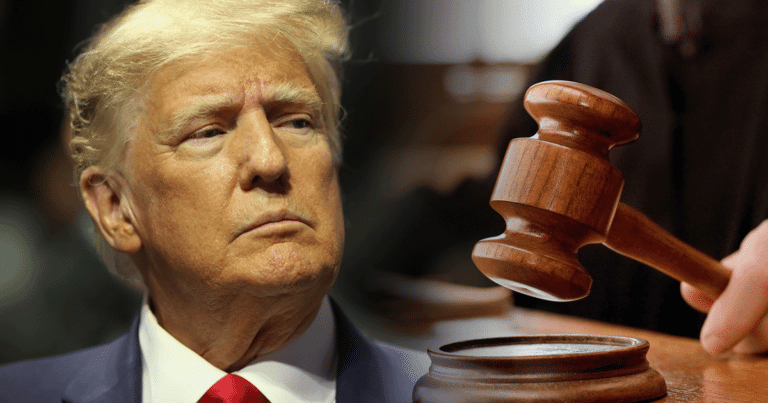
There was a time in this country when the separation of powers actually meant something. The president ran the executive branch. Congress wrote the laws. Judges interpreted them. Simple. Effective. And it kept the republic intact for over two centuries. But an increasingly brazen class of federal judges – many handed lifetime appointments by Democratic presidents – have apparently decided that arrangement is optional.
The newest battleground is Seattle, where a single federal judge has taken it upon himself to tell the President of the United States which prosecutors he’s allowed to employ. Not as a polite legal suggestion. As a direct order, backed by the full weight of a federal injunction, commanding the executive branch to accept a U.S. Attorney that the president explicitly and immediately rejected.
From The Post Millennial:
A federal judge ruled on Thursday that Roger Rogoff is the US Attorney for the Western District of Washington. President Donald Trump immediately fired Rogoff when the district’s federal judges appointed him in July to replace First Assistant Attorney Charles Neil Floyd, who failed to advance in the United States Senate.
The president nominated Pete Serrano to the post in September, and Serrano already took over the office. Judge Stanley Bastian, appointed by Barack Obama, decided that Trump had no authority to fire Rogoff, and said Rogoff could assume office, effective immediately.
A judge who thinks he’s the president
Here’s what actually happened. When Floyd’s nomination stalled in the Senate, the Western District’s 17 federal judges invoked a contested federal statute allowing them to appoint an interim U.S. Attorney. They picked Roger Rogoff – a former King County Superior Court judge – without so much as a phone call to the Trump administration. President Trump responded decisively, firing Rogoff exactly 54 minutes after his swearing-in ceremony.
Floyd resumed his duties. In September, Trump nominated Pete Serrano, who took over the office. Done deal – or so any reasonable person would assume.
But Rogoff sued. And Judge Stanley Bastian, an Obama appointee sitting in the Eastern District of Washington, delivered a preliminary injunction that reads less like a judicial ruling and more like a hostile takeover memo.
Bastian didn’t just declare Rogoff the rightful U.S. Attorney. He went dramatically further. He barred the President of the United States, Attorney General Todd Blanche, and the entire Department of Justice from firing Rogoff, interfering with his service, or even acknowledging anyone else as the district’s top federal prosecutor. “The president cannot unilaterally fire a United States attorney appointed by the district court,” Bastian proclaimed from the bench. Extraordinary words from a man nobody elected to anything.
What the Constitution actually says
Bastian’s ruling collides head-on with the text of the document he swore to uphold. The Appointments Clause isn’t vague. U.S. Attorneys are principal officers of the executive branch, nominated by the president and confirmed by the Senate. The statute Bastian leaned on – which permits judicial appointment of interim U.S. Attorneys when no Senate nomination is pending – was crafted as a temporary placeholder. Nobody who wrote that law envisioned district judges wielding it as a weapon against the White House.
Attorney General Blanche nailed it back in July: “District court judges can appoint a temporary U.S. Attorney, and POTUS can fire them. WDWA judges abandoned the time-honored process of consultation with the administration so that the selected U.S. Attorney is qualified to serve in the administration.”
Translation: the district judges played a deliberate political game. Bastian is running interference for them.
Time for consequences
The Department of Justice has announced it will seek an immediate stay and appeal the decision. Good. But appellate relief alone won’t fix what’s broken here.
Judge Bastian issued an order that functionally strips the president of control over his own prosecutors in an entire federal district. That’s not judging. That’s governing – and nobody gave him that authority. A district court judge with an Obama-era pedigree and an apparent ax to grind does not get to override the constitutional prerogatives of a sitting president. Period.
Congress needs to pay attention. Judicial independence is a vital principle, but it was never designed to be a blank check for political overreach. When one unelected judge can veto the president’s staffing decisions and muzzle the Attorney General, the system isn’t functioning – it’s being exploited. Hard questions need to be directed at Bastian, and lawmakers have every tool available to ask them: oversight hearings, jurisdiction limitations, and for the most egregious offenders, impeachment.
The Founders entrusted the American people – through their elected president – with the power to direct the executive branch. That bedrock principle is now under direct assault from an unelected judge in Washington state who seems convinced his judgment supersedes the Constitution. The appellate courts must correct this swiftly. And if they won’t, Congress must.
Key Takeaways
- An Obama-appointed federal judge ruled Trump cannot fire a court-appointed U.S. Attorney.
- The ruling directly undermines the president’s constitutional authority over executive personnel.
- The DOJ plans to appeal, but Congress should also scrutinize this judicial overreach.
- Unelected judges with lifetime tenure should never dictate who prosecutes federal cases.
Sources: The Post Millennial, POLITICO