The United States Senate is not a ceremonial gig. It is one of the most consequential positions in American government – one that grants access to classified intelligence briefings, national defense strategy, and the deepest corridors of our security infrastructure. When voters send someone to that chamber, they’re making a profound bet on that person’s judgment, loyalty, and honesty.
Which brings us to Michigan’s Senate race, where something far more serious than the usual campaign mudslinging is playing out. This isn’t a squabble over tax policy or zoning laws. This is a fundamental question about whether a candidate’s documented history of cheerleading an Islamist movement should permanently bar him from one of the most sensitive offices in the country. Spoiler: it should.
From the Daily Wire:
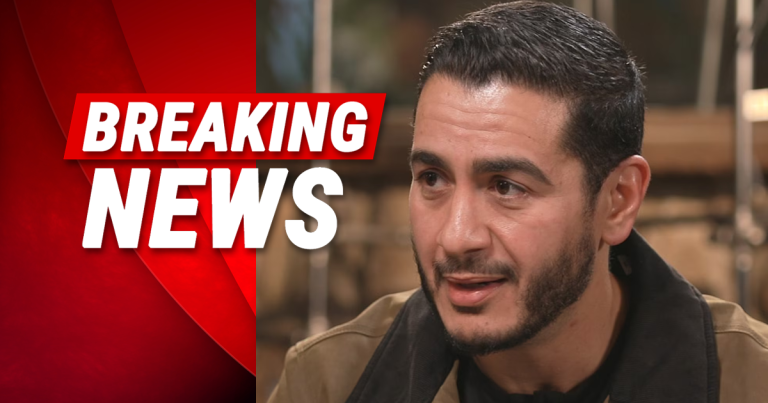
Even The New York Times is now reporting that Michigan Democratic Senate nominee Abdul El-Sayed signed a 2012 letter urging Egypt’s Muslim Brotherhood president to “purge the media and police,” echoing a revelation previously reported by the Washington Free Beacon.
Published in Arabic on the Egyptian news website Al-Ahram Gate in November 2012, days after then-Egyptian President Mohamed Morsi issued a sweeping declaration expanding his powers and shielding his decisions from judicial review, the letter backed what it called Morsi’s “revolutionary decisions,” according to the Washington Free Beacon.
When the New York Times – an outlet that would sooner endorse a root canal than a conservative talking point – starts confirming what the Washington Free Beacon reported, the story has moved well past “partisan attack” territory.
A letter that speaks for itself
The 2012 letter is blunt to the point of breathtaking. The signatories, El-Sayed among them, wrote: “We, leaders of the Egyptian community, support the revolutionary decisions taken by the president, and we call on him to purge the media and the police as quickly as possible.” No ambiguity there. No room for creative reinterpretation. That is an explicit endorsement of authoritarian power consolidation by a Muslim Brotherhood president who had just stripped Egypt’s judiciary of its oversight authority.
El-Sayed was in medical school at the time – a grown man making a deliberate political statement. And when the Times came asking about it? His campaign declined to answer. Silence is not a rebuttal. It’s a tell.
A pattern, not a convenient lapse
Here’s the thing – the letter wasn’t some isolated misfire. In 2011, El-Sayed published articles in The Huffington Post and The Guardian actively defending the Muslim Brotherhood, arguing that Americans shouldn’t assume the movement would govern like Iran or Hamas. That aged well.
His mother, Fatten Elkomy, previously worked for the Islamic American Relief Agency, a charity the U.S. government designated as a supporter of terrorist organizations, including al-Qaeda. And El-Sayed’s own public disavowal of the Brotherhood? That arrived conveniently once his Senate polling started tightening. Years of documented sympathy don’t vanish because a campaign consultant advised a new talking point.
The Senate is no place for this gamble
Sen. Ted Cruz has been direct about the stakes, warning that an El-Sayed victory could create an “unprecedented national security risk.” His concern is specific and legitimate: Senate committee assignments could hand El-Sayed access to classified information, potentially endangering American service members abroad.
The Trump administration has designated multiple Muslim Brotherhood branches as terrorist organizations, including affiliates in Egypt, Jordan, Lebanon, and Sudan. The Brotherhood itself, founded in 1928 by Hassan al-Banna, has shaped Islamist movements across the Middle East and Africa – most notably Hamas, which the United States designates as a foreign terrorist organization. These connections are not theoretical. They are documented and consequential.
The bottom line
Michigan voters carry an enormous weight this election cycle. The reporting is now bipartisan – even outlets hostile to conservatives have confirmed the substance of El-Sayed’s Brotherhood ties. A United States Senate seat demands absolute trust, and Abdul El-Sayed has handed voters a mountain of reasons to withhold theirs. This man cannot become a senator.
Key Takeaways
- El-Sayed signed a 2012 letter urging Egypt’s Muslim Brotherhood president to purge media and police.
- His campaign refuses to answer direct questions about his documented Islamist ties.
- A Senate seat grants classified intelligence access – El-Sayed’s record makes that a national security gamble.
- Even the New York Times now confirms the story conservatives flagged first.
Sources: Daily Wire