In a civilized society, few promises carry more weight than the one made to families of the murdered: that justice, however slow, will be served. It’s the thread that holds grief together – the belief that the system remembers, even when the world moves on.
California voters understood this. Twice – in 2012 and again in 2016 – they went to the polls and rejected efforts to abolish the death penalty. The people spoke, clearly and repeatedly. The democratic process worked exactly as designed.
Then Gavin Newsom decided it didn’t matter. Earlier this month, the outgoing governor announced plans to commute all 548 death sentences in California to life imprisonment without parole. Every single one – not case by case, not after careful individual review. A blanket erasure, handed down like a royal decree weeks before he walks out the door. You almost have to admire the audacity.
Among the beneficiaries: Richard Allen Davis, who kidnapped twelve-year-old Polly Klaas from a sleepover and murdered her. Isauro Aguirre, convicted of torturing eight-year-old Gabriel Fernandez to death. Marcus Wesson, who killed nine members of his own family after years of raping his daughters and nieces. The list runs twenty names deep, each one worse than the last.
Mercy for the wolves
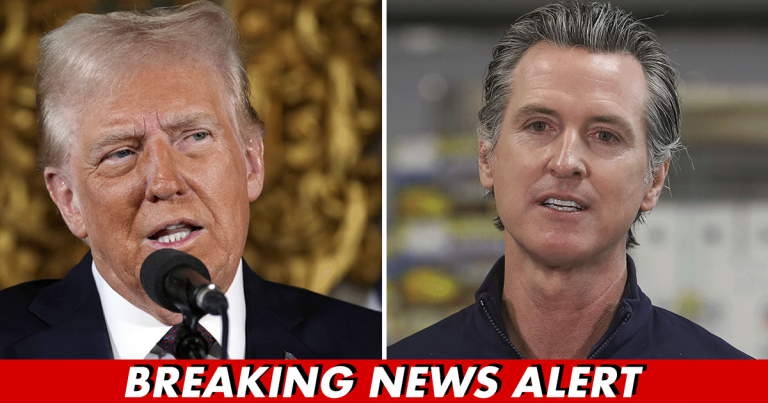
President Trump announced he will appear at the Department of Justice on Monday alongside Attorney General Todd Blanche, FBI Director Kash Patel, and families of murder victims to publicly condemn the commutations. Say what you will – that’s what it looks like when leadership picks a side.
From Fox News:
“Governor Newsom is failing the victims and their families by refusing to carry out justice against these barbaric child killers and serial killers. These murderers raped, tortured and terrorized innocent victims. Governor Newsom must stop playing politics with public safety.”
Marc Klaas, Polly’s father, confirmed he would attend. His words to the California Post were haunting in their simplicity: “He’s putting these people closer and closer and closer to freedom, and these are absolutely the worst, most disgusting people that have ever lived.”
I don’t know how anyone hears that and still defends what Newsom is doing.
The fightback begins
Newsom isn’t going unchallenged. A coalition of prosecutors, victims’ advocates, and law enforcement leaders filed suit on November 16th to block the commutations. Former Sacramento County DA Anne Marie Schubert put it plainly: “Blanket commutation is not an exercise of discretion – it is an abandonment of it.”
More than 380 of the 548 cases still require California Supreme Court approval, and victims’ groups have already pushed for recusals of justices they view as sympathetic to Newsom’s position. The legal battle is far from over.
Trump, for his part, has taken the opposite path entirely – directing the DOJ on his first day back in office to prioritize seeking lawful death sentences and reinstating federal execution protocols.
What this is really about
Let me tell you what gnaws at me. Newsom himself wrote, “California voters have voted to keep the death penalty on the books, and I respect that.” Then he overrode every single one of them. That’s not respect. That’s not even disagreement. It’s contempt dressed in compassion – and I’m tired of watching people fall for it.
Funny how “California’s values” never seem to include actually asking Californians.
The families gathering in Washington on Monday aren’t asking for vengeance. They’re asking for the promise their state made to them – the same promise millions of voters affirmed. Ask yourself: what would you want if it were your child? When one man can erase all of it with a stroke of his pen, justice doesn’t just fail.
It expires.
Key Takeaways
- Newsom plans to commute all 548 California death sentences, overriding voters who rejected abolition twice.
- Trump will stand with victims’ families at the DOJ to publicly condemn the mass commutations.
- Prosecutors and victims’ advocates have filed suit to block Newsom’s blanket clemency as unconstitutional.
- California’s legal battle is far from over, with more than 380 cases still requiring Supreme Court approval.
Sources: Fox News, California Post