
There’s a sound that haunts the small towns of Pennsylvania, Ohio, and Michigan – the silence of a factory floor that used to hum. For decades, American manufacturing has been bled dry by foreign competitors who don’t play by the same rules. Governments in Beijing, Brussels, and beyond pour subsidies into their industries, then flood global markets with cheap goods that no American plant can match on price alone.
The scope of the problem is staggering. We’re not just talking about steel anymore – though that’s bad enough. Batteries, cement, chemicals, processed food. Entire sectors where state-backed foreign producers churn out more than the world could possibly absorb, crushing prices and the American workers who used to make those things. China’s trade surplus has ballooned to record highs, and nobody in Washington should be pretending that’s an accident. As one trade lawyer put it to AFP, these subsidized factories “never get turned off, even if there’s no demand.” The result? Oversupply, depressed prices, and a hollowed-out industrial base right here at home.
When the Supreme Court struck down President Trump’s emergency tariffs last February, critics couldn’t pop the champagne fast enough. They assumed the trade fight was over. They didn’t bother reading the fine print. The administration launched a formal Section 301 investigation in March – a methodical, legally grounded probe into unfair trade practices – and on Wednesday, it delivered its answer.
New tariffs, new legal footing
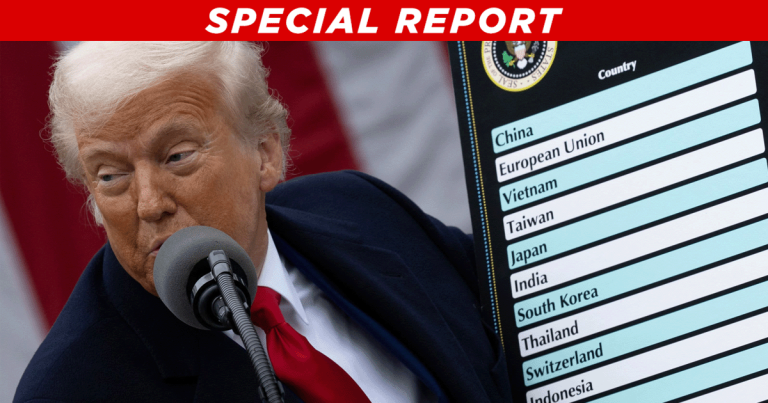
The White House proposed new tariffs on 14 major trading partners, targeting the structural overcapacity that has tilted the playing field against American manufacturers for years.
From Reuters:
“We know that they don’t like these actions, but we are seeking stability with the Chinese. China is seeking stability with us,” a senior US official said, adding Trump’s meeting with Chinese President Xi Jinping last week was “really great.” Even so, as ING analysts noted, “while the legal justification for tariffs keeps changing, US protectionism is becoming increasingly difficult to unwind.”
Behind the diplomatic language, the numbers tell a straightforward story. China faces the highest proposed rate at 20%. The EU, Japan, South Korea, Taiwan, India, Vietnam, and eight other economies are also in the crosshairs. Critically, the new duties won’t exceed caps already negotiated in existing trade deals – 20% for China, 15% for the EU and Japan, 19% for Malaysia. They also won’t stack on top of the forced-labor tariffs imposed on 60 countries in July; whichever rate is higher prevails.
Specific rates will be published in the Federal Register, with a public comment period and hearing before implementation – likely no earlier than January.
The price of doing nothing
Look, I’m not going to pretend these tariffs are painless. Inflation sits at 3.7%. Republicans just got hammered in the midterms. A Reuters/Ipsos poll shows 62% of Americans want tariffs repealed. The media loves that number. You’ll see it in every headline for the next two weeks.
But funny how nobody polls the follow-up question: what happens when we can’t make our own cement? Our own batteries? When every critical supply chain runs through a country that views us as a strategic competitor?
Short-term price increases are real. I feel them at the grocery store like everyone else. But long-term dependence on foreign rivals who subsidize their industries as a matter of national strategy? That’s not an inconvenience – that’s an existential threat.
The factory floor doesn’t have to stay quiet. Whether this administration – now staring down a Democratic Congress with no appetite for trade fights – has the spine to see it through is the only question that actually matters.
Key Takeaways
- Trump proposes new tariffs on 14 trading partners to counter foreign overcapacity threatening American manufacturing.
- China faces the highest proposed rate at 20%; duties won’t exceed existing trade deal caps.
- New tariffs use Section 301 legal authority after the Supreme Court struck down emergency tariffs in February.
- Short-term consumer costs are real, but long-term industrial dependence on rivals poses a far greater threat.