
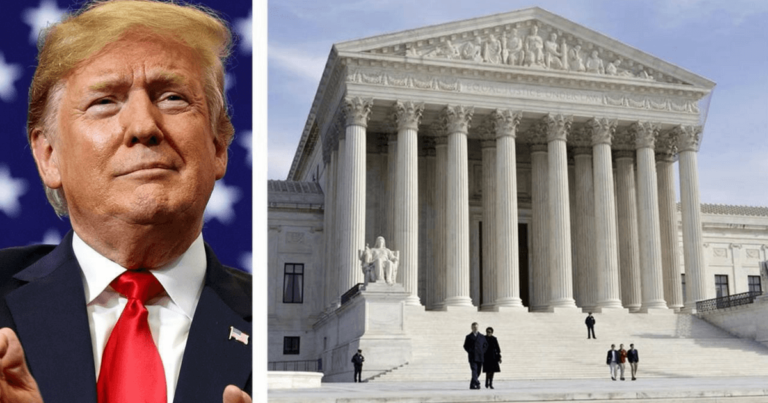
Picture a convicted drug trafficker and domestic abuser who has been deported from the United States six separate times – and is still tangled up in our legal system, still angling for release. That’s not some exaggerated thought experiment. That’s an actual case working its way toward the Supreme Court right now. And the kicker? Whether this man walks free might depend less on federal law than on which state he happens to be detained in.
For years, criminal aliens with violent rap sheets have weaponized conflicting court rulings to stall their removal, stretch out their detention, and ultimately slip back onto American streets. The Trump administration is done watching it happen. Solicitor General John Sauer is hauling this fight directly to the highest court in the land – and he’s not waiting around for lower courts to dither.
From Fox News:
The Trump administration is asking the Supreme Court to revive a major immigration fight over whether criminal aliens can be held without bond throughout removal proceedings or are entitled to a hearing when their detention drags on.
Solicitor General John Sauer asked the Supreme Court on Monday to take up Genalo v. D.C., reviving a constitutional fight the justices had been set to hear this term in Genalo v. Black before New York Democratic Gov. Kathy Hochul’s pardon rendered that case moot.
So who exactly are we talking about here? The detainee at the center of Genalo v. D.C. is a Dominican national identified as D.C. His criminal record includes drug trafficking and domestic violence charges. According to ICE, he has been physically removed from this country on six prior occasions. Federal law is unambiguous: individuals like him must remain in custody while their deportation cases play out. That’s not some hard-line interpretation. That’s the statute.
Here’s where the story gets genuinely maddening. The Supreme Court was already geared up to resolve this exact constitutional question in Genalo v. Black. Then New York Governor Kathy Hochul pardoned the convicted felon at the heart of that case, effectively blowing the whole thing up and rendering it moot. Convenient timing, to say the least. Whether that was deliberate sabotage or staggering negligence, the damage was identical – a critical immigration enforcement question shelved indefinitely.
But the Trump administration didn’t fold. Sauer pivoted fast, identifying a new case presenting the same legal question and petitioning the Court to take it up immediately – before the Second Circuit even finishes its own deliberations. That’s an unusual procedural move, and it signals just how seriously this administration takes the issue.
The gamesmanship nobody wants to talk about
The deeper rot here isn’t just one repeat offender or one governor’s ill-timed pardon. It’s a system that actually rewards delay.
From Fox News Digital:
“A lot of times these aliens will file multiple applications for asylum, withholding removal. They’ll get new attorneys, switch out attorneys, ask for continuances, ask for delays,” Mizelle said. “So all of a sudden they’ve been in detention now, six, seven, eight months, completely of their own making.”
That’s Chad Mizelle – former acting associate attorney general and current litigation chair at the America First Policy Institute – describing what he bluntly calls “gamesmanship.” Under the Second Circuit’s current rules, once detention stretches past a certain point, the criminal alien gets a bond hearing. And here’s the real insult: the government has to prove why the detainee should stay locked up. So every frivolous filing, every attorney swap, every manufactured delay brings these individuals closer to freedom. They’re running out the clock, and the rules let them do it.
Carrie Severino, president of the Judicial Crisis Network, put it even more directly. She called the whole scheme “a foot dragging, sand in the gears exercise,” noting that detainees frequently request continuances themselves, then pivot to complaining that detention has dragged on too long. “It’s often a situation where people are playing both sides of it,” she said.
The Trump administration’s position is straightforward: if bond hearings are constitutionally required at all, the detainee should bear the burden of proving he deserves release. Not the other way around. Hard to argue with that logic.
One country, one standard
There’s an even more fundamental problem lurking beneath the procedural wrangling. As Florida State University law professor Michael Morley told Fox News Digital, a criminal alien’s entitlement to a bond hearing currently “depends on which jurisdiction they happen to fall in.” Think about that. Identical federal law, applied differently depending on geography. That’s not how a constitutional republic is supposed to function.
The Supreme Court itself has acknowledged as much. As Morley noted, the justices previously went out of their way to leave this question open for a future case. That future case has arrived.
President Trump has made immigration enforcement a defining commitment of his administration, and this petition reflects that seriousness of purpose. The law says criminal aliens awaiting deportation stay in custody. The only real question before the Court is whether that law means what it plainly says – or whether it can be gamed, delayed, and litigated into irrelevance. For the safety of every American community, the justices need to get this one right.
Key Takeaways
- The Trump administration is urging the Supreme Court to close bond hearing loopholes for criminal aliens.
- Gov. Hochul’s pardon of a convicted felon effectively sabotaged the original SCOTUS immigration case.
- Criminal aliens exploit procedural delays and frivolous filings to game their way out of detention.
- A nationwide circuit split means identical federal immigration law is applied differently by geography.
Sources: Fox News