
Americans have always expected their elected leaders to meet a basic standard of honesty. Call it old-fashioned, but most people believe that if you’re asking for the public’s trust, you should probably tell them the truth. Especially about serious matters like family history and racial terror. That doesn’t seem like a big ask.
Yet here we are. A troubling pattern keeps emerging: politicians craft compelling personal narratives that crumble the moment someone bothers to check. The stories typically involve overcoming tremendous adversity. They paint the candidate as uniquely forged by struggle. And when these tales fall apart? They reveal something worse than exaggeration. They expose a willingness to exploit genuine historical trauma for political gain.
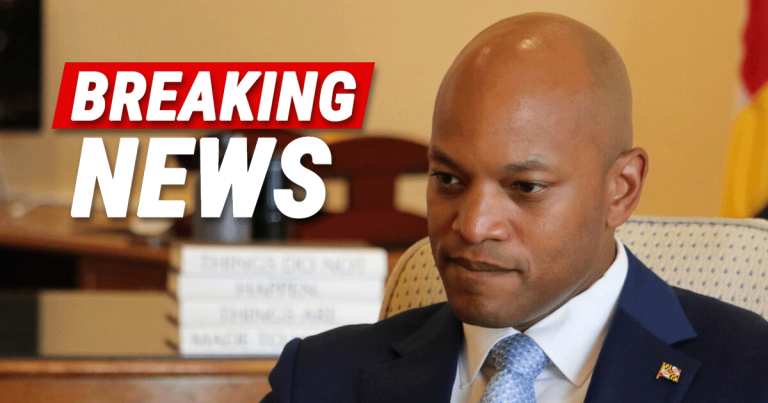
And Americans are discovering a top Democrat is doing exactly this. The politician this time? Maryland Governor Wes Moore. A rising Democratic star who built part of his public persona on a dramatic claim: his great-grandfather was “run out of this country by the Ku Klux Klan.” His words, not mine. Speaking to Time magazine in 2023, Moore declared himself “literally the grandson of someone who was run out of this country by the Ku Klux Klan.” He deployed this story to explain how he “reconciles Patriotism” with America’s “racist past.” His historic election as Maryland’s first black governor became the triumphant answer to his family’s suffering.
Powerful stuff. Great narrative arc. One small problem: historical records suggest it may be fiction.
A Different Story Emerges
The Washington Free Beacon decided to do what journalists used to do regularly. They investigated. They examined church archival records housed at the Protestant Episcopal Church in the Diocese of South Carolina. What they discovered contradicts every major element of Moore’s story.
From the Washington Free Beacon via BizPac Review:
Detailed church archival records, as well as contemporary newspaper coverage, indicate that Thomas, a Jamaica native, on Dec. 13, 1924, made an orderly and public transfer from South Carolina to the island of his birth, where he was appointed to succeed a prominent Jamaican pastor who had died unexpectedly a week earlier, on Dec. 6, 1924. Amid the copious documentation of the life and career of Moore’s great-grandfather, there is no mention of trouble with the Klan, which operated openly in 1920s South Carolina but never had a chapter operating out of Pineville, according to Virginia Commonwealth University’s Mapping of the Second Ku Klux Klan.
Moore claimed his great-grandfather, Rev. Josiah Johnson Thomas, fled the country suddenly and secretly. The records say otherwise. Moore implied Thomas was targeted by the Ku Klux Klan. No evidence supports this. Moore suggested Thomas was a prominent preacher who spoke against racism from the pulpit. The documentation doesn’t back that up either.
The reality appears far less cinematic. Thomas made a planned, public transfer to Jamaica. He filled a pastoral vacancy created when a colleague died unexpectedly. No midnight escape. No hooded riders giving chase. Just a routine church assignment, meticulously documented by his denomination.
Here’s the real kicker. Virginia Commonwealth University maintains a comprehensive mapping of Klan activity during the 1920s. Their research shows no KKK chapter ever operated out of Pineville, South Carolina—the very town where Thomas preached. Hard to be run out of town by an organization that wasn’t there.
Deflection Over Transparency
So how did Governor Moore respond when confronted with actual historical evidence? Did he clarify? Provide additional family documentation? Acknowledge uncertainty in the oral tradition?
Not exactly.
Spokesperson Ammar Moussa offered this gem to Fox News Digital: “We’re not going to litigate a family’s century-old oral history with a partisan outlet.”
Church archives contradict your story. Newspaper records from 1924 don’t support it. Academic research undermines a key detail. And your response is to call the messenger “partisan” and walk away.
That’s not an answer. That’s a dodge. Labeling the Free Beacon “partisan” doesn’t make Episcopal Church records disappear. It doesn’t erase a century of documentation. It simply avoids the uncomfortable question entirely.
Moore built political capital on this narrative. He invoked it to frame his governorship as a direct rebuke to racial terror. If the foundation crumbles, voters deserve a genuine response. Not a press secretary’s dismissive talking points about “oral history.”
Key Takeaways
- Historical records contradict Governor Wes Moore’s claim that his great-grandfather fled the KKK.
- Church archives show a routine, public pastoral transfer to Jamaica—not a secret escape.
- Moore’s office dismissed the findings rather than addressing the documented evidence.
- Voters deserve leaders who prioritize truth over politically convenient narratives.
Sources: BizPac Review